
SEO Audit Process Used by Agencies | SEOScrapper
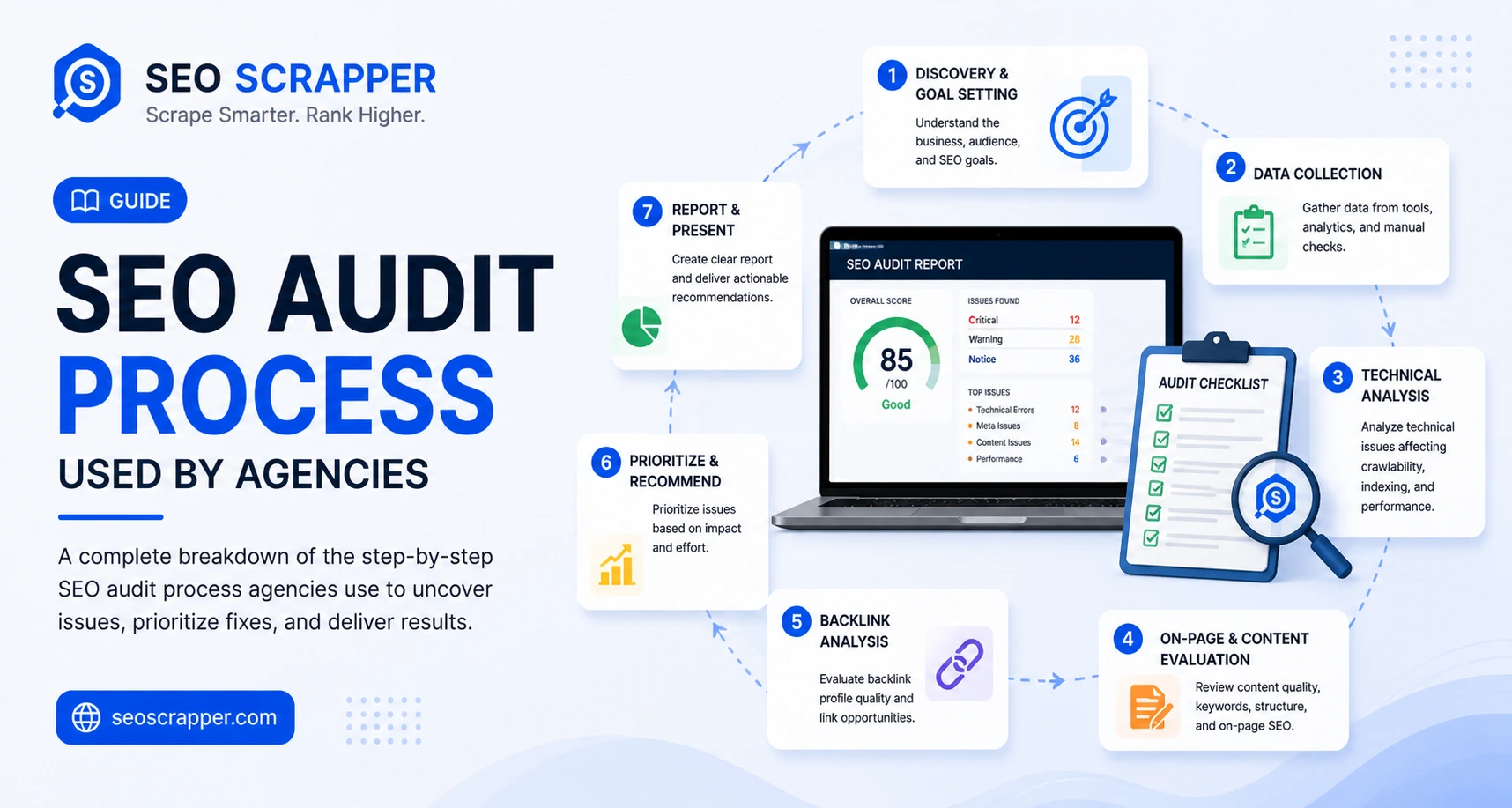
Most SEO audits fail because they rely on reports rather than reasoning. Running a tool and exporting issues is not an audit. It is a surface scan. A real audit identifies where search engines lose efficiency, clarity, or trust while interacting with your website. The difference matters. Two sites can show similar reports, yet one grows consistently while the other stagnates. The reason is not the data. It is how that data is interpreted and prioritized. This guide breaks down the actual audit process used to diagnose ranking limitations, not just list issues.
What an Audit Is Meant to Solve
An audit should answer three questions:
- Where is crawl efficiency being lost?
- Where are the indexing signals unclear or conflicting?
- Where is the structural support too weak to rank? If your audit cannot answer these, it is incomplete. For a complete breakdown of technical issues to validate during an audit, refer to a structured Technical SEO Checklist.
Step 1: Crawl Behavior Analysis (Not Just Crawlability)
Most audits check if pages are accessible. Professional audits check how they are accessed.
What to Analyze
- Crawl depth of priority pages
- Internal pathways to important content
- Redirect paths and delays
- Crawl waste (duplicate/parameter URLs)
- Differences in Googlebot-Smartphone vs desktop crawling
What Actually Matters
Crawl inefficiency is often hidden:
- Important pages are buried too deeply
- Crawlers are spending time on low-value URLs
- Mobile crawl paths behave differently from desktop
Q: Why is my site crawled but not performing?
A: Because crawl resources are not reaching your most important pages efficiently.
Step 2: Indexing Reality Check (What Is Actually Stored)
Crawled pages are not always indexed. The goal here is to compare what exists vs what is actually stored and prioritized.
What to Analyze
- Indexed vs non-indexed pages
- Canonical behavior
- Duplicate page selection
- Coverage inconsistencies
What Actually Matters
- Pages indexed incorrectly (wrong version)
- Important pages are missing from the index
- Duplicate URLs competing internally
Q: Why are my pages indexed but still not ranking?
A: Because indexing does not guarantee correct prioritization or relevance.
Step 3: Signal Alignment (Where Most Sites Fail)
Search engines evaluate signals together — not individually.
What to Analyze
- Canonical vs internal linking consistency
- Sitemap vs indexable pages
- URL variations across the site
- Directive conflicts
What Actually Matters
Signal conflict is one of the biggest hidden issues:
- Internal links pointing to one version
- Canonical pointing to another
- Sitemap listing a third This creates uncertainty, and search engines resolve it on their own.
Step 4: Rendering and Processing Analysis
Search engines do not just crawl HTML. They process and render content.
What to Analyze
- HTML vs rendered output
- JavaScript dependency
- DOM complexity
- LCP element visibility in initial HTML
What Actually Matters
- Content loading after interaction
- Critical elements delayed in rendering
- Deep DOM is slowing processing These lead to partial indexing, not full visibility.
Q: Why is my content visible but not fully indexed?
A: Because search engines cannot efficiently render or process your page.
Step 5: Internal Linking and Structure Audit
This step defines how authority flows.
What to Analyze
- Link distribution to key pages
- Orphan pages
- Anchor text patterns
- Structural hierarchy
What Actually Matters
Most sites fail here due to:
- Random linking
- No clear priority pages
- Weak topic connections
Internal Linking Action System
- Link priority pages from high-crawl pages
- Use intent-driven anchor text
- Connect related content into clusters
- Ensure every key page receives internal links This transforms the structure from random to strategic.
Step 6: Performance and Crawl Efficiency Impact
Performance is not just about speed — it affects crawl behavior.
What to Analyze
- Server response consistency
- Load behavior of critical content
- Resource blocking issues
- Mobile performance gaps
What Actually Matters
- Slow response reduces crawl frequency
- Heavy pages delay processing
- Mobile inefficiencies affect indexing priority
Step 7: Content–Technical Alignment
Even strong content fails without technical support.
What to Analyze
- Intent alignment
- Content depth
- Structural placement
- Internal support
What Actually Matters
- Content targeting the wrong intent
- Pages competing internally
- Lack of structural support
Audit Output (What a Real Audit Delivers)
A proper audit is not a list — it is a system.
Your Output Should Include
- High-impact blockers (fix immediately)
- Structural weaknesses (fix next)
- Efficiency improvements (ongoing)
- Clear action roadmap Without prioritization, audits lose value.
Priority Fix Framework
Focus in this order:
- Crawl inefficiencies
- Indexing conflicts
- Internal linking gaps
- Rendering issues
- Performance bottlenecks This ensures maximum impact.
What Makes This Audit Process Different
Most audits:
- List issues
- Focus on tool reports
- Ignore system-level problems
This process focuses on:
- Real crawl behavior
- Signal clarity
- Structural efficiency
- Ranking limitations
Closing Perspective
A single problem rarely causes ranking issues. They usually develop from multiple small inefficiencies across crawling, indexing, and structure. When these inefficiencies exist together, they reduce clarity for search engines and limit how effectively your pages are evaluated. An effective audit focuses on identifying these gaps and resolving them in a structured way. These conflicts can be detected using advanced technical SEO audit tools. Once signals become consistent and the site is easier to process, visibility improves naturally without forcing rankings.
Next Step
Review your website using this SEO audit process and identify where crawl efficiency, indexing signals, or internal structure are not aligned. Focus on fixing high-impact issues first, then monitor how search engines respond over time.