
SEO in 2026: What Changed After AI Search & How to Rank Now
Introduction
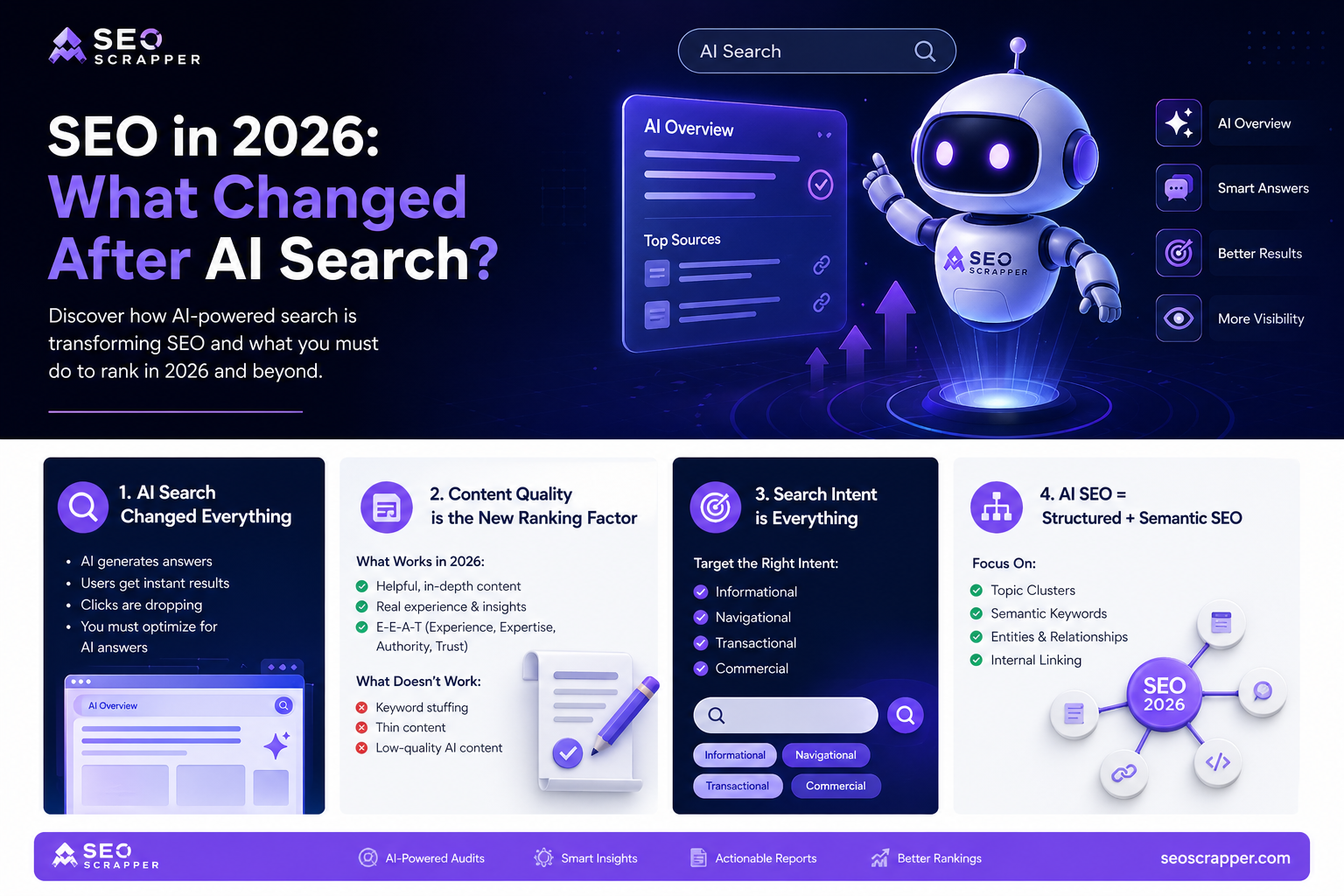
Search engine optimization has undergone one of its biggest transformations in history. With the rise of AI-powered search systems, traditional SEO practices are no longer enough to maintain rankings or drive traffic. In 2026, search engines are not just indexing websites; they are interpreting, summarizing, and even answering user queries directly.
This shift has fundamentally changed how content is discovered and consumed. Businesses, marketers, and creators who fail to adapt are already losing visibility, while those who understand AI-driven SEO are gaining a significant competitive advantage.
This article explores how SEO has changed in 2026, what strategies are no longer effective, and what you must do now to rank in an AI-first search ecosystem.
The Rise of AI Search and the End of Traditional SERPs
The introduction of AI-driven search experiences has transformed how users interact with search engines. Instead of browsing through a list of blue links, users are now presented with direct answers generated by artificial intelligence.
These AI-generated responses pull information from multiple sources and present it in a summarized format. As a result, users often get what they need without ever visiting a website.
This has reduced organic click-through rates significantly and introduced a new challenge for SEO professionals: optimizing content not just for ranking, but for being selected and cited by AI systems.
In 2026, ranking on the first page is no longer the ultimate goal. The real objective is to become part of the AI-generated answer.
Why Content Quality Has Become the Core Ranking Factor
AI search engines are far more sophisticated than traditional algorithms. They can understand context, evaluate depth, and assess the usefulness of content in ways that were not possible before.
Low-quality content, even if optimized with keywords, is quickly ignored. Thin articles, generic AI-generated text, and content written solely for search engines no longer perform well.
Instead, search engines now prioritize content that demonstrates real experience, expertise, authority, and trust. This shift has made authenticity and depth critical components of successful SEO.
High-ranking content in 2026 is typically comprehensive, well-structured, and written with genuine insight. It answers questions thoroughly and provides value beyond what users can find elsewhere.
Understanding Search Intent in an AI-Driven World
Search intent has always been important, but in 2026 it has become the foundation of SEO strategy. AI systems are designed to understand exactly what a user is looking for and deliver the most relevant response.
This means that targeting broad keywords is no longer effective. Instead, content must align closely with specific user needs and expectations.
For example, a generic keyword like “SEO tools” is less effective than a more targeted query such as “best AI SEO tools for startups in 2026.” The latter reflects a clear intent and is more likely to match what users are searching for.
By focusing on precise, intent-driven keywords, websites can increase their chances of being featured in AI-generated responses.
The Shift Toward Semantic and Entity-Based SEO
Modern SEO is no longer just about keywords; it is about understanding topics and relationships between concepts. AI search engines rely heavily on semantic analysis to determine the relevance of content.
This means that content should not only include target keywords but also related terms, entities, and contextual information. Instead of creating isolated pages, websites should build interconnected topic clusters that establish authority in a specific niche.
Internal linking plays a crucial role in this strategy, helping search engines understand the structure and depth of your content. When done correctly, semantic SEO improves both rankings and visibility in AI search results.
Technical SEO in the Age of AI
Despite all the changes, technical SEO remains a critical component of success. AI systems still rely on structured data and clean website architecture to crawl and understand content effectively.
Websites that load quickly, are mobile-friendly, and use proper schema markup have a clear advantage. Structured data helps AI systems interpret content more accurately, increasing the likelihood of being included in generated answers.
In 2026, technical SEO is not just about optimization; it is about making your content accessible and understandable for intelligent systems.
The Impact of Zero-Click Searches
One of the most significant changes in SEO is the rise of zero-click searches. These occur when users find their answers directly on the search results page without clicking any links.
AI-generated summaries, featured snippets, and knowledge panels have contributed to this trend. While this may seem like a disadvantage, it also presents new opportunities.
By structuring content to answer questions clearly and concisely, websites can increase their chances of being featured in these prominent positions. This visibility, even without clicks, helps build brand authority and recognition.
The Role of AI SEO Tools in 2026
As SEO becomes more complex, manual optimization is no longer sufficient. AI-powered tools have become essential for analyzing data, identifying opportunities, and optimizing content efficiently.
Advanced SEO tools can now perform detailed audits, uncover technical issues, and provide actionable insights in real time. They can also analyze competitors, suggest keyword strategies, and help create optimized content.
Platforms like SEO Scrapper are designed to meet these demands, offering AI-driven insights that simplify the optimization process and improve overall performance.
What Strategies Actually Work in 2026
Successful SEO strategies in 2026 are built around value, relevance, and adaptability. Websites that focus on creating meaningful content and aligning with user intent consistently outperform those relying on outdated tactics.
Long-form content that thoroughly covers a topic tends to perform better, especially when supported by strong internal linking and semantic structure. Additionally, optimizing content for AI-generated answers has become a key priority.
Technical performance, including page speed and mobile usability, also plays a significant role in rankings. Combined with the use of AI tools, these strategies create a strong foundation for sustainable growth.
What No Longer Works in Modern SEO
Many traditional SEO tactics have become ineffective or even harmful. Practices such as keyword stuffing, spammy backlinks, and low-quality content creation no longer deliver results.
Generic AI-generated content, in particular, is easily identified and often ignored by modern search engines. Similarly, short, shallow articles fail to meet the expectations of users and AI systems alike.
To succeed in 2026, SEO strategies must evolve beyond these outdated methods and focus on delivering real value.
The Future of SEO: From Search Engine Optimization to Search Experience Optimization
SEO is no longer just about optimizing for search engines; it is about optimizing for the entire search experience. This includes how users interact with content, how AI systems interpret it, and how effectively it meets user needs.
The future of SEO lies in understanding both human behavior and artificial intelligence. Websites that can bridge this gap will be the ones that dominate search results in the coming years.
As AI continues to evolve, so will the strategies required to succeed. Staying ahead will require continuous learning, experimentation, and adaptation.
Conclusion
SEO in 2026 is more dynamic and challenging than ever before. The rise of AI search has changed the rules, making traditional strategies obsolete and introducing new opportunities for those willing to adapt.
Success now depends on creating high-quality, intent-driven content, optimizing for AI systems, and leveraging advanced tools to stay competitive.
The landscape may have changed, but the goal remains the same: delivering value to users. Those who focus on this principle will continue to thrive, regardless of how search evolves.